










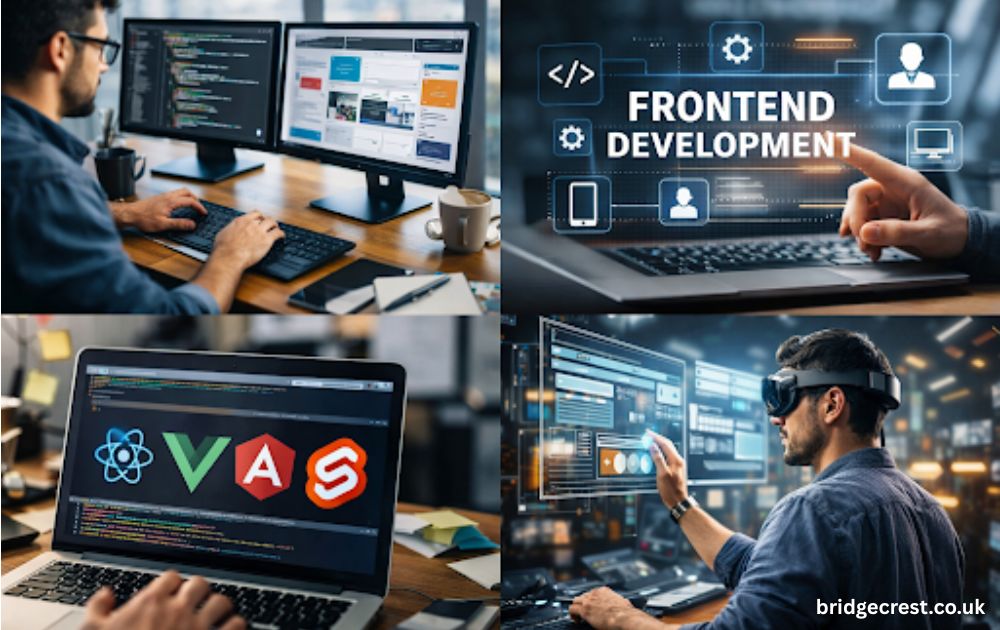
In today’s hyper‑connected world, technology evolves at a breathtaking pace. From mobile apps to enterprise web platforms, users expect fast, beautiful, and intuitive digital experiences. At the heart of these experiences lies frontend development the art and science of creating what users see, touch, and interact with on their screens.
Frontend development has shifted dramatically over the past decade. What was once limited to basic HTML and CSS has transformed into a complex discipline involving rich user interfaces, interactive animations, and seamless performance across devices. It’s no longer just about building pages it’s about sculpting experiences.
Understanding the Role of Frontend Development
Frontend development refers to the part of web or application development that focuses on the client side: the interface users interact with directly. Frontend developers take raw data and functionality, and turn it into something accessible, understandable, and engaging. Every button clicked, form filled, or animation triggered is powered by frontend code.
At its core, frontend development revolves around three major technologies:
- HTML (HyperText Markup Language) — the backbone that defines structure.
- CSS (Cascading Style Sheets) — responsible for visual presentation and layout.
- JavaScript — the programming language that breathes life into web pages.
Together, these tools enable developers to design interfaces that are not only visually appealing but also responsive, accessible, and performant.
Why Frontend Development Matters More Than Ever
Users have grown more demanding. They expect fast load times, flawless animations, and engaging interactions whether on a desktop, tablet, or smartphone. Slow or clunky interfaces no longer just frustrate users; they drive them away.
In an era where first impressions can make or break customer engagement, frontend development acts as the bridge between user expectations and brand success. A well‑crafted frontend can dramatically improve conversion rates, boost customer satisfaction, and elevate brand credibility.
Moreover, as digital accessibility becomes a greater priority, frontend developers are essential in ensuring that websites are usable for everyone including people with disabilities. This means thoughtful design, semantic code, and adherence to accessibility standards that make the internet more inclusive.
Modern Frontend Tools and Frameworks
The world of frontend development today is rich with powerful tools and frameworks that make building complex applications faster and more reliable. Some of the most widely adopted tools include:
- React: a component‑based JavaScript library known for building dynamic and reusable UI elements.
- Vue.js: a progressive framework praised for its simplicity and flexibility.
- Angular: a comprehensive framework for building large, scalable applications.
- Svelte: a modern tool that compiles code ahead of time, improving performance by reducing overhead.
These modern frameworks help developers handle complex user interactions, manage application state, optimize performance, and build scalable architectures.
The Frontend Developer’s Mindset
A great frontend developer is more than just someone who writes code. They think like designers who understand structure, aesthetics, and user psychology. They also think like problem solvers who can navigate the challenges of cross‑browser compatibility, responsive layouts, and performance bottlenecks.
Frontend developers must balance creativity with logic. They translate user needs into functional features while working within the constraints of technology. From envisioning a smooth animation to debugging a layout issue on a specific device, their problem‑solving skills are continuously challenged.
Bridging the Gap with Professional Staff Augmentation
Many businesses recognize the value of strong frontend development, but not all companies have immediate internal resources to scale their digital teams. This is where staff augmentation becomes a game‑changer. Professional frontend experts can seamlessly integrate with existing teams to elevate development velocity and quality.
If your business is expanding its digital footprint or planning a large‑scale application, taking advantage of specialized frontend talent can make a noticeable difference. Skilled developers can accelerate product delivery, improve code quality, and bring fresh perspectives to UX design and performance optimization.
Through strategic frontend staff augmentation, companies gain access to top professionals without the overhead and time involved in traditional hiring. It’s a smart approach for businesses that want expertise, flexibility, and results fast.
Looking Ahead: The Future of Frontend Development
The future of frontend development is exciting. With advancements in web performance, animation capabilities, artificial intelligence, and hardware acceleration, interfaces are becoming richer and more immersive. Augmented reality (AR), progressive web apps (PWAs), and voice‑based interactions are just a few areas where frontend developers are pushing the boundaries of what’s possible.
As digital products become more ingrained in daily life, the demand for exceptional frontend talent will only grow stronger. Companies that invest in cutting‑edge interfaces today will shape the user experiences of tomorrow.
Conclusion
Responsive designs, engaging interactions, seamless performance these aren’t just buzzwords. They are the expectations users hold for every digital product they touch. Frontend development is the foundation that makes those expectations a reality.
Whether you’re building a brand‑new application or enhancing an existing user interface, investing in skilled frontend development is essential. And if you need expert support to scale your team, professional augmentation services can bring precision, speed, and innovation to your projects.
Frontend isn’t just development anymore it’s the craft of human‑centered digital experience.