










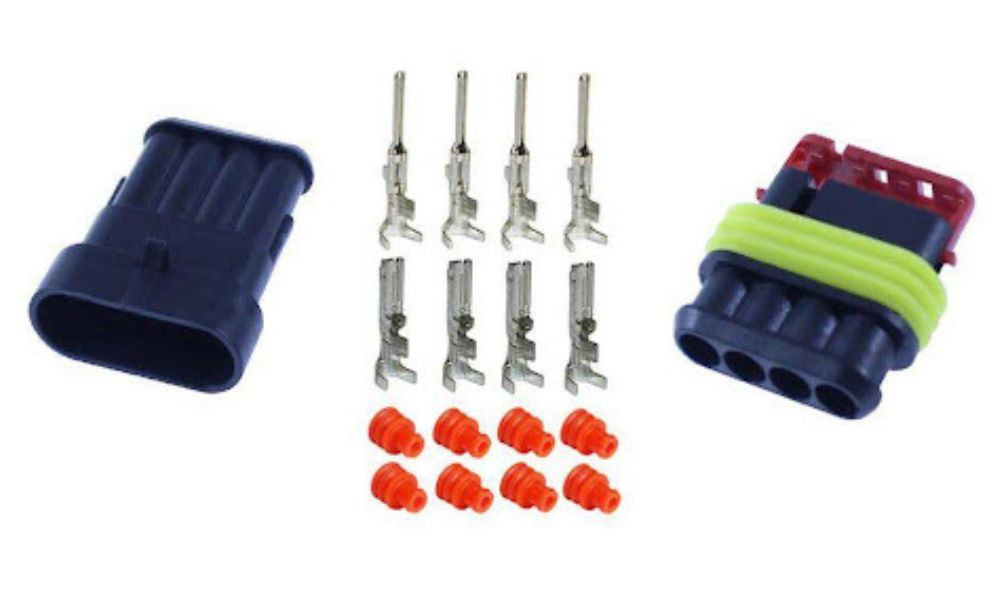
Automotive connectors have an increasingly important role in vehicles, as there are lots of complex electrical systems to go with the higher requirements for environmental protection, comfort, and intelligence. This also means that the connectors are expected to be more secure and reliable as they have to carry more power and transmit more data.
There are almost 100 types of automotive connectors used in general automobiles, but electrical and automotive engineers have to ensure that they choose the right one for the job. In this guide, we’ll take you through the key considerations for selecting automotive connectors.
Electrical Performance and Ratings
The main function of automotive connectors is to ensure that power passes from one circuit to another. However, there are varied electrical requirements in automobiles. For example, the rain sensor on the windshield only requires low power to activate the wipers, whereas the radar sensors for collision detection and Adaptive Cruise Control require a significant amount of power.
This means that an automotive connector has to fit the power requirements, so ensure you check the current capacity and voltage rating.
Apart from these, you may also need to consider the contact resistance. Resistance can generate a lot of heat, which can then lead to performance issues or premature wear.
Environmental Resistance
Vehicles are exposed to different environmental conditions, and their connectors have to remain stable and functional at all times. And for that, check the Ingress Protection (IP) rating to ensure a connector suits the role.
For example, if you need a connector for use near the engine, it needs to be dust-proof and withstand high temperatures and high-pressure water jets. That’s the IP6K9K rating. Those in exposed areas like wheel arches will often have the IP69K rating to ensure they can resist dust and water sprays, but cabin ones often only need water resistance (IP67 and IP68).
Besides the ratings, you should also consider the materials used. This will help avoid corrosion or breakage, depending on the area of use.
Mechanical Reliability
If the connector can’t hold up physically, the electrical performance means little. The connector needs to stay stable under vibration, temperature changes, and multiple disconnections, if necessary.
One thing to check here is the mating cycle rating, which is basically an indicator of the number of times you can connect and disconnect without compromising performance. This is important for connectors that will be used in components that might need to be replaced or tested frequently. Other parts, like airbags, are only connected once, but they need terminal position assurance (TPA) to ensure they stay locked in for life.
So, essentially, the mechanical design needs to suit the role.
Standards and Compliance
You need to ensure that the automotive connectors meet the required standards in the UK and across Europe. Besides checking the boxes, this is important for safety and durability, and you’ll also play your part in environmental responsibility. It will also ensure that your products or services meet performance expectations in different regions.
As a basis, you can work with CE and RoHS compliance. The former tells you that a product meets the EU’s health, safety, and environmental standards, while the latter ensures that an electrical product doesn’t use materials that may be considered hazardous. The two often mirror the wider ISO requirements.
Matching the Connector to the Job
Despite the large number, each automotive connector is designed with a specific purpose in mind, and you need to match the connector to the intended use. Even if it’s just a wire-to-wire connector, different ones will have different voltage ratings, environmental, and mechanical requirements.
Modern vehicles also add to this complexity. You’ll need connectors that can handle the high-power requirements of EV drivetrains, while also ensuring that you maintain reliable data transfer everywhere, as it’s necessary for assisted driving.
So, clearly categorize automotive connectors based on their roles. This way, it will be easy to filter out unsuitable connectors and ensure safe and reliable connections.